
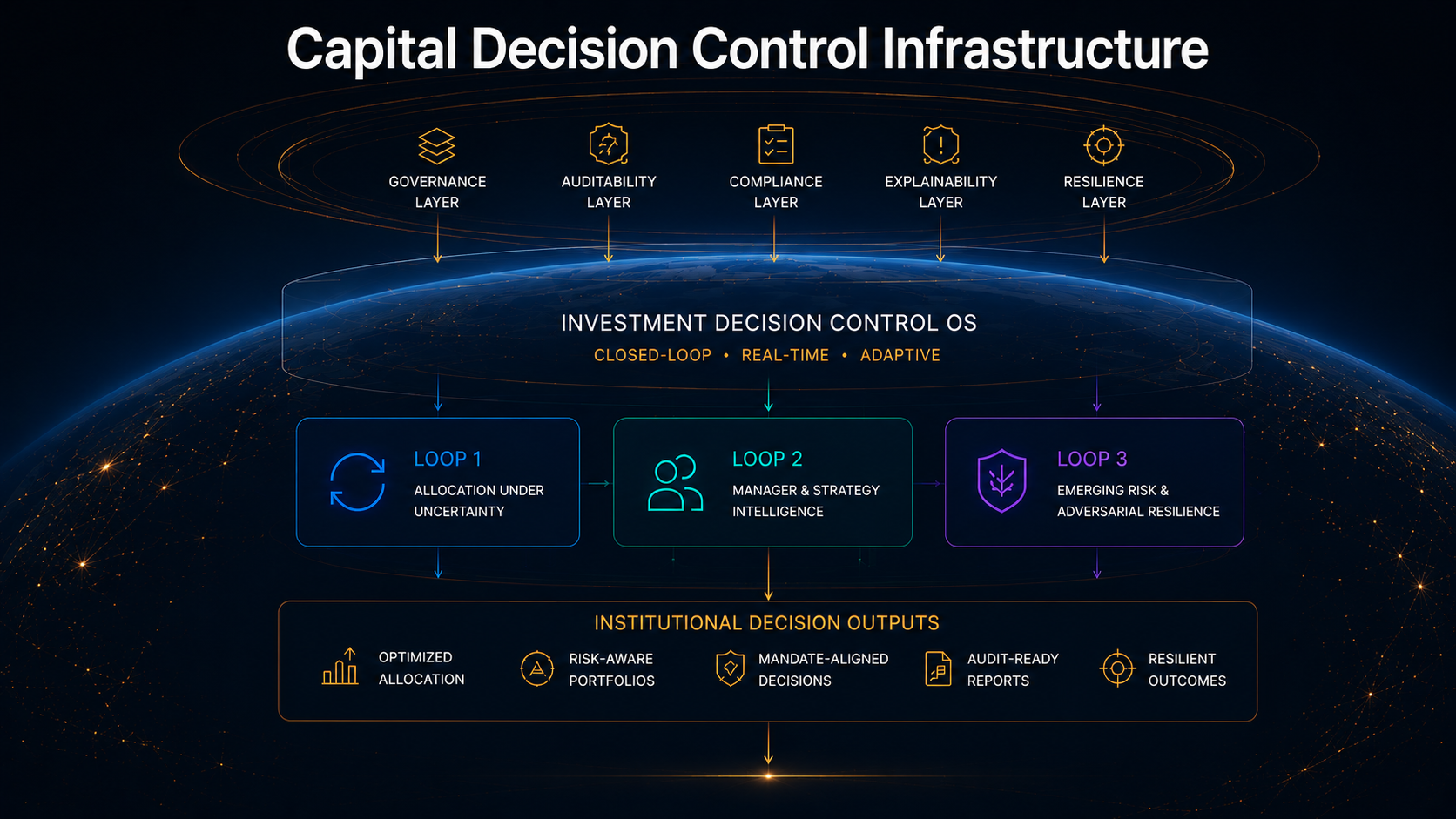
This page is part of the Capital Decision Control Infrastructure. View the category definition → Capital Decision Control Infrastructure — Definition
What Is Domain Decision Control OS?
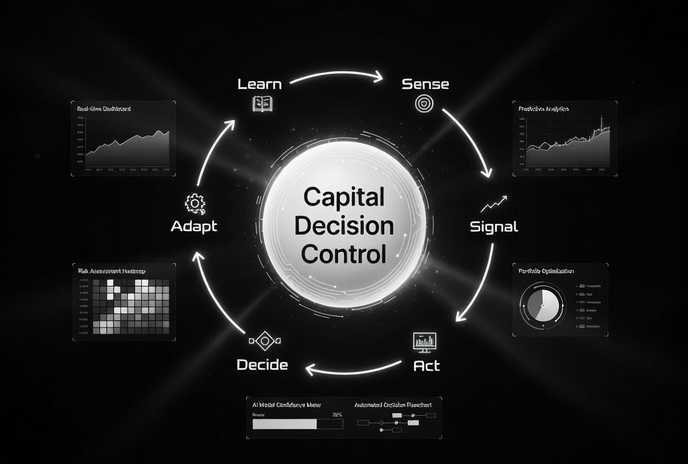
The Domain Decision Control OS defines how governed decision‑control operates across any institutional domain. It translates the capital‑first architecture of the Capital Decision Control Infrastructure into domain‑specific decision systems that remain aligned, safeguarded, and exposure‑aware.
This OS ensures that domain‑level decisions are:
- governed
- constraint‑aligned
- mandate‑consistent
- exposure‑validated
- capital‑disciplined
- institutionally auditable
It is not analytics. It is not workflow. It is not a dashboard. It is decision control.
This Domain Decision Control OS operates inside the broader Capital Decision‑Control Infrastructure; see the Category Anchor.
DECISION CONTROL OS INDEX
Domain Decision Control OS Index
Domain Decision Control OS Modules
The Decision Control OS extends into six domain‑level OS layers. Each domain inherits the OS‑level primitives; Drift Engine, Mandate Engine, Certification Layer, Oversight Layer, Exposure Governance, Runtime Governance, Control Fabric, and OAG; and applies them to its governed decision environment. These domain OS layers form the structural foundation for governed execution across capital, risk, portfolio, exposure, research, and agentic systems.
Capital Decision Control OS The capital‑level governance environment that enforces capital mandates, capital drift prevention, exposure boundaries, and runtime‑controlled capital alignment across all institutional decision loops.
Investment Decision Control OS The governed investment environment inside the Decision‑Control OS.
Risk Decision Control OS The governed risk environment inside the Decision‑Control OS, enforcing mandate alignment, exposure boundaries, drift prevention, and runtime‑controlled execution.
Portfolio Decision Control OS The governed portfolio environment that ensures mandate‑aligned, exposure‑bounded, drift‑free portfolio construction and rebalancing.
Exposure Decision Control OS The governed exposure environment that enforces capital‑aligned exposure boundaries and prevents recursive exposure drift.
Research Decision Control OS The governed research environment that ensures inference, analysis, and model pathways remain drift‑free, mandate‑aligned, and runtime‑controlled.
Agentic AI Decision Control OS The governed agentic environment that applies runtime constraints, recursion control, and drift prevention to agentic systems and autonomous decision loops.
Drift Index – Six Pathways of Institutional Drift is the Decision Control OS’s collapse model; a governed map of all institutional drift pathways across decisions, exposures, portfolios, mandates, models, research, behavior, and agentic systems. It defines the failure modes the OS must continuously sense, govern, and prevent to maintain alignment, stability, and institutional design intent.
SI Governance Domain Decision‑Control OS governs institutional decision domains such as research, performance, risk, construction, allocation, behavioral, and adversarial. SI Governance governs future‑intelligence classes that may operate across these domains, ensuring that all intelligence‑class execution remains constrained, deterministic, and aligned with operator intent. Together, Domain OS and SI Governance form the horizontal governance layers of the Decision Control OS.
WHY
Why Domain Decision Control OS Exists
Institutions operate across multiple domains; investment, manufacturing, construction, supply chain, aerospace, and more. Each domain introduces unique constraints, exposures, mandates, operational boundaries, and capital‑flow sensitivities.
Without domain‑specific decision‑control, institutional decisions drift, accumulate unmanaged exposure, and lose alignment with capital intent.
The Domain Decision Control OS prevents this drift by establishing governed decision architecture for any domain where capital, risk, and institutional mandates intersect.
WHAT IT GOVERNS
What the Domain Decision Control OS Governs
The OS governs domain‑specific decision loops:
- Domain action loops; how domain decisions are generated
- Domain evaluation loops; how decisions are assessed
- Domain correction loops; how strategies adapt
- Domain governance loops; how constraints are enforced
- Domain safety loops; how boundaries are maintained
These loops ensure domain decisions remain stable, predictable, and aligned with institutional capital intent.
POSITIONING
Position Inside the Governed Intelligence Stack
The Domain Decision‑Control OS sits inside the broader governed intelligence stack:
- Capital Decision Control Infrastructure → category
- Capital Decision‑Control OS → category OS
- Domain Decision Control OS → domain OS
- Investment Decision Control OS → vertical OS
- Investment Decision ControlOS (product) → implementation
This structure ensures perfect alignment between category, domain, vertical, and product layers; without hierarchy drift.
VERTICAL OS MODULES
Vertical Decision Control OS Modules
The Domain Decision Control OS enables vertical decision‑control systems across capital‑intensive industries:
- Investment Decision Control OS
- Manufacturing Decision‑Control OS
- Construction Decision‑Control OS
- Supply Chain Decision‑Control OS
- Aerospace Decision‑Control OS
- Real Estate Decision‑Control OS
- University Decision‑Control OS
Each vertical OS applies domain‑level governance to its specific industry.
PRODUCTS
Products Inside Verticals
- Investment Decision ControlOS (product); implements governed decision‑control inside the investment vertical, enforcing mandate alignment, drift prevention, and runtime governance across all investment decisions.
- Future decision control products; will implement governed decision‑control inside future verticals
CATEGORY OWNERSHIP
Category
- Investment Decision‑ControlOS (product); implements governed decision control inside the investment vertical
- Future decision‑control products; will implement governed decision control inside future verticals
ARCHITECTURE
The Domain Decision Control Architecture
The Domain Decision Control OS enforces a governed, capital‑aligned architecture across every institutional domain. It applies the capital‑first constraints of the Capital Decision Control Infrastructure to domain‑specific decision environments.
It governs the full domain decision lifecycle through:
- Domain Research Governance: How domain‑level inputs, data, and insights are validated against institutional constraints.
- Domain Mandate Governance: How domain mandates are interpreted, enforced, and kept capital‑aligned.
- Domain Sizing Governance: How domain decisions are sized, scaled, or weighted within exposure boundaries.
- Domain Execution Governance: How domain actions are executed under governed constraints and safety boundaries.
- Domain Monitoring Governance: How domain decisions are continuously evaluated for drift, exposure, and mandate alignment.
- Domain Adaptation Governance: How domain strategies adjust under governed correction loops.
Each stage is governed by domain‑specific loops, constraints, and oversight mechanisms that ensure decisions remain capital‑aligned, exposure‑aware, and institutionally auditable.
DECISION LOOPS
Domain Decision Loops
Every Domain Decision‑Control OS enforces domain‑specific loops that govern how decisions are made, evaluated, corrected, governed, and stabilized across any institutional domain:
- Domain Action Loops; govern how domain actions are taken within domain constraints, mandates, and capital‑aligned boundaries.
- Domain Evaluation Loops; ensure domain decisions are evaluated against operational conditions, mandate constraints, exposures, and institutional priorities.
- Domain Correction Loops; enforce governed self‑correction when domain decisions deviate from mandates, exposure limits, or institutional intent.
- Domain Governance Loops; maintain institutional oversight across domain research, planning, operations, risk, and performance.
- Domain Safety Loops; ensure stability under domain‑specific stress conditions, volatility, operational shocks, and adversarial environments.
These loops operate within the constraints set by the Capital Decision Control OS, which establishes the capital‑aligned boundaries each domain OS must enforce.
RELATIONSHIP
How the Domain Decision‑Control OS Interacts With Agentic Systems
ALIGNMENT
Institutional Alignment & Capital Stability
WHO THIS IS FOR
Who This Category Is For
This category is built for institutions deploying governed decision‑control across capital‑intensive domains, including:
- Investment institutions; asset managers, hedge funds, pension funds, endowments, sovereign wealth funds
- Treasury & Capital Management; corporate treasury, liquidity management, balance sheet optimization
- Risk & Exposure Functions; market risk, credit risk, portfolio risk, enterprise risk
- Enterprise Decision Systems; cross‑domain capital allocation, strategic investment programs, multi‑asset governance
It is designed for:
- CIOs (Chief Information Officers)
- Chief Investment Officers
- CTOs (Chief Technology Officers)
- Chief Risk Officers
- Enterprise Architects
- Governance & Compliance Leaders
- Institutional Allocators & Investment Committees
Any organization deploying governed decision‑control into domain‑level decision processes, operational systems, or capital allocation requires this OS to prevent drift, enforce mandate, and maintain capital‑aligned governance.
REASON
Why This Category Will Dominate the Next Decade
Institutions cannot scale autonomous decision‑making unless they first scale the Decision Control System.
The next era of institutional AI is not:
- more agents
- more autonomous workflows
- more LLM wrappers
- more orchestration platforms
It is governed, closed‑loop, recursion‑controlled Decision Control; intelligence that can act, but only inside institutional boundaries.
This category replaces:
- agentic AI platforms
- autonomous workflow engines
- AI orchestration tools
- domain‑specific agent frameworks
- unbounded agentic systems
with a single, unified Decision Control System that stabilizes autonomous intelligence across industries.
The Capital Decision Control OS is the operating system that makes autonomous, agentive decision‑making safe, governed, auditable, and institution‑ready.
It transforms autonomous intelligence from “powerful but unstable” into governed, recursion‑controlled, mandate‑aligned institutional capability.
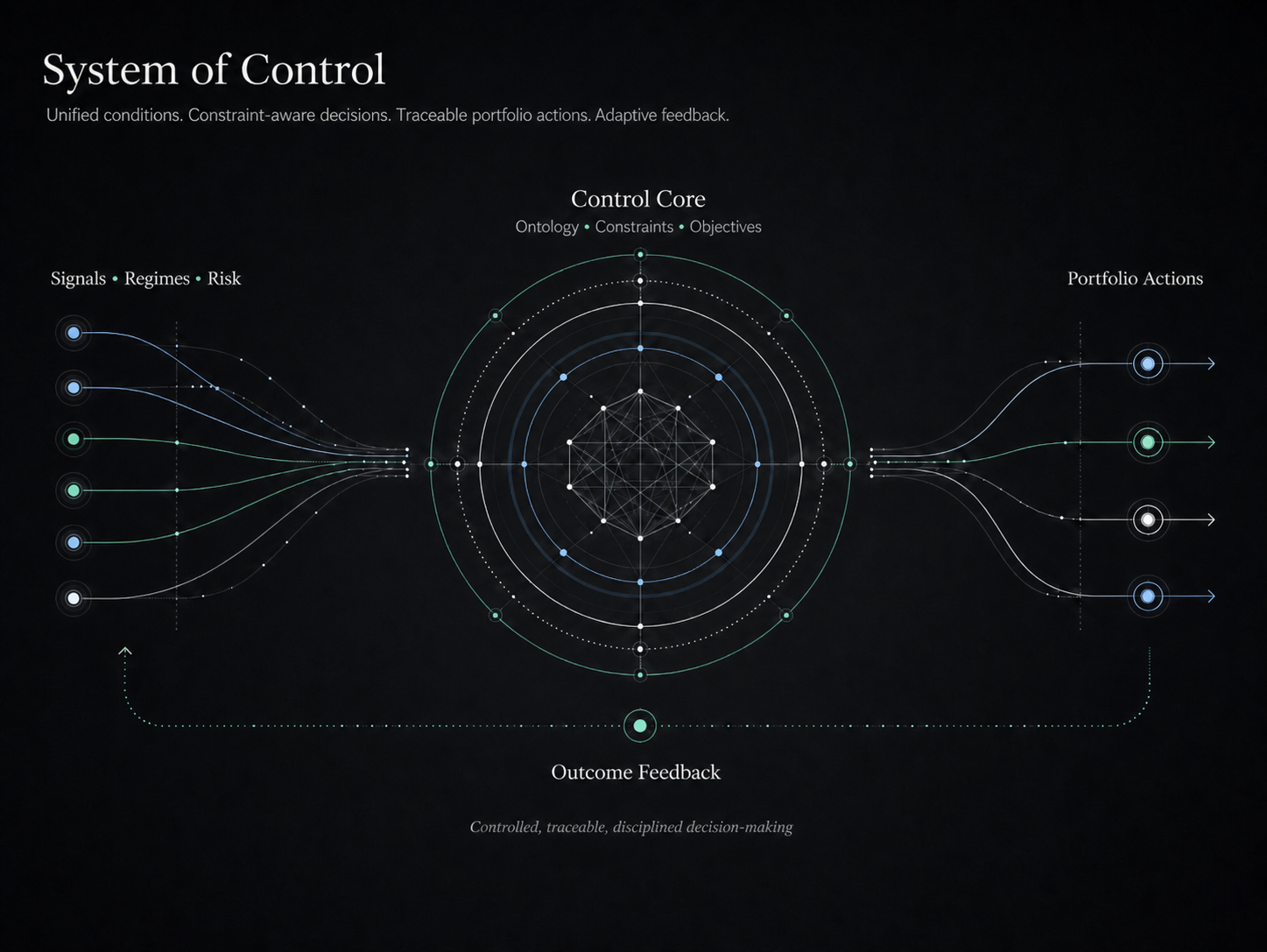
GOVERNANCE DOMAINS
Governance Domains of the Domain Decision Control OS
SUMMARY
Summary
The Domain Decision Control OS governs all domain‑level decisions across research, planning, sizing, execution, monitoring, and adaptation. It defines the rules, constraints, and governed loops that keep every domain decision aligned with institutional intent, mandate limits, exposures, and capital boundaries.
It operates in parallel with the Domain Agentic AI Control OS, which governs agentic execution inside those constraints. Frida executes within the Agentic AI Investment Control OS; the investment‑domain agentic layer that inherits governance from the domain‑level agentic OS.
Together, these parallel layers ensure domain decisions remain stable, governed, auditable, and capital‑aligned across the entire institutional lifecycle.
GLOSSARY
Glossary Of Decision Control Terms
- Agentic AI: A recursive, self‑directing AI system capable of generating actions, plans, and decisions without human prompting.
- Agentic AI Control OS: The category‑level governance operating system that defines recursion‑control, institutional safety, and decision‑control rules for agentic AI across all industries.
- Agentic AI Investment Control OS: Acumentica’s governed agentic AI operating system for institutional investment. Implemented as Neuro‑Precision AI (Frida), it executes investment‑related decisions inside the Investment Decision‑Control OS.
- Agentic AI Governance & Control: The governance domain that defines rules, constraints, and institutional boundaries for agentic AI behavior.
- Capital Decision Control OS: The top‑level governed decision‑control operating system for institutional decision‑making across capital, risk, and enterprise domains.
- Neuro‑Precision AI: Acumentica’s governed agentic AI system (Frida), built on the Agentic AI Investment Control OS for institutional investment environments.
- PrecisionOS²: Acumentica’s precision‑governed operating system for institutional decision systems and governed AI execution.
- Decision Drift: The phenomenon where decision systems; human or AI; gradually deviate from intended decision patterns without governance or recursion‑control.
- Recursion‑Control: The mechanism that governs how agentic AI loops, evaluates, and improves its own decisions while preventing runaway recursion.
- Governance Domains: Structured rule sets inside the Decision Control OS that define how governed decision systems operate within institutional boundaries.
- Institutional Guardrails: Constraints that prevent decision systems; human or agentic; from producing unbounded, unsafe, or non‑compliant decisions.
- Agentive Intelligence: AI that autonomously generates tasks, strategies, and decisions through recursive self‑direction.
- Decision Control Loops: Governed loops that ensure decisions remain auditable, compliant, and aligned with institutional policy.
- Safety Layer: The OS layer that prevents decision systems from executing actions outside defined institutional boundaries.
AGI Investment Research Labs
Where Investment Ideas Shape Tomorrow.
 https://acumentica.com/wp-content/uploads/2024/06/Agents.ModeOfAction.jpg
1024
1024
Team Acumentica
https://acumentica.com/wp-content/uploads/2026/02/Acumentica-Logo_Hor_with-Subtext_White_web-11.png
Team Acumentica2026-03-02 02:21:062026-06-25 18:51:52Advanced Portfolio Optimization
https://acumentica.com/wp-content/uploads/2024/06/Agents.ModeOfAction.jpg
1024
1024
Team Acumentica
https://acumentica.com/wp-content/uploads/2026/02/Acumentica-Logo_Hor_with-Subtext_White_web-11.png
Team Acumentica2026-03-02 02:21:062026-06-25 18:51:52Advanced Portfolio Optimization https://acumentica.com/wp-content/uploads/2026/02/decisioncontrolsysytem.jpg
1504
688
Team Acumentica
https://acumentica.com/wp-content/uploads/2026/02/Acumentica-Logo_Hor_with-Subtext_White_web-11.png
Team Acumentica2026-02-14 02:08:502026-06-25 18:56:44Why Asset Managers Need Investment Control Infrastructure
https://acumentica.com/wp-content/uploads/2026/02/decisioncontrolsysytem.jpg
1504
688
Team Acumentica
https://acumentica.com/wp-content/uploads/2026/02/Acumentica-Logo_Hor_with-Subtext_White_web-11.png
Team Acumentica2026-02-14 02:08:502026-06-25 18:56:44Why Asset Managers Need Investment Control Infrastructure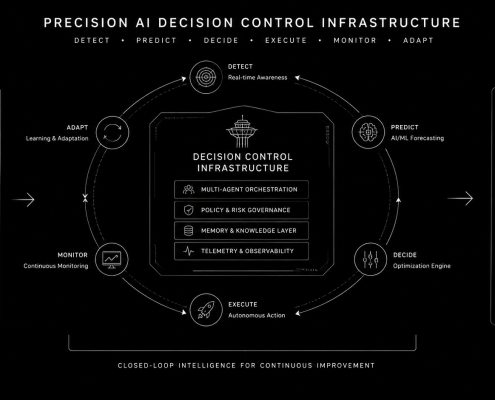 https://acumentica.com/wp-content/uploads/2026/05/EndOfChatBots.png
941
1672
Team Acumentica
https://acumentica.com/wp-content/uploads/2026/02/Acumentica-Logo_Hor_with-Subtext_White_web-11.png
Team Acumentica2026-01-20 17:40:582026-08-28 22:32:16The End of AI Chatbots: Why Enterprises Are Moving Toward Precision AI Decision Control Infrastructure
https://acumentica.com/wp-content/uploads/2026/05/EndOfChatBots.png
941
1672
Team Acumentica
https://acumentica.com/wp-content/uploads/2026/02/Acumentica-Logo_Hor_with-Subtext_White_web-11.png
Team Acumentica2026-01-20 17:40:582026-08-28 22:32:16The End of AI Chatbots: Why Enterprises Are Moving Toward Precision AI Decision Control InfrastructureExperience Investment Control
Your Strategy Deserves Precision
See how Acumentica helps investment teams forecast markets, optimize portfolios, and govern decisions within defined risk and mandate constraints.