
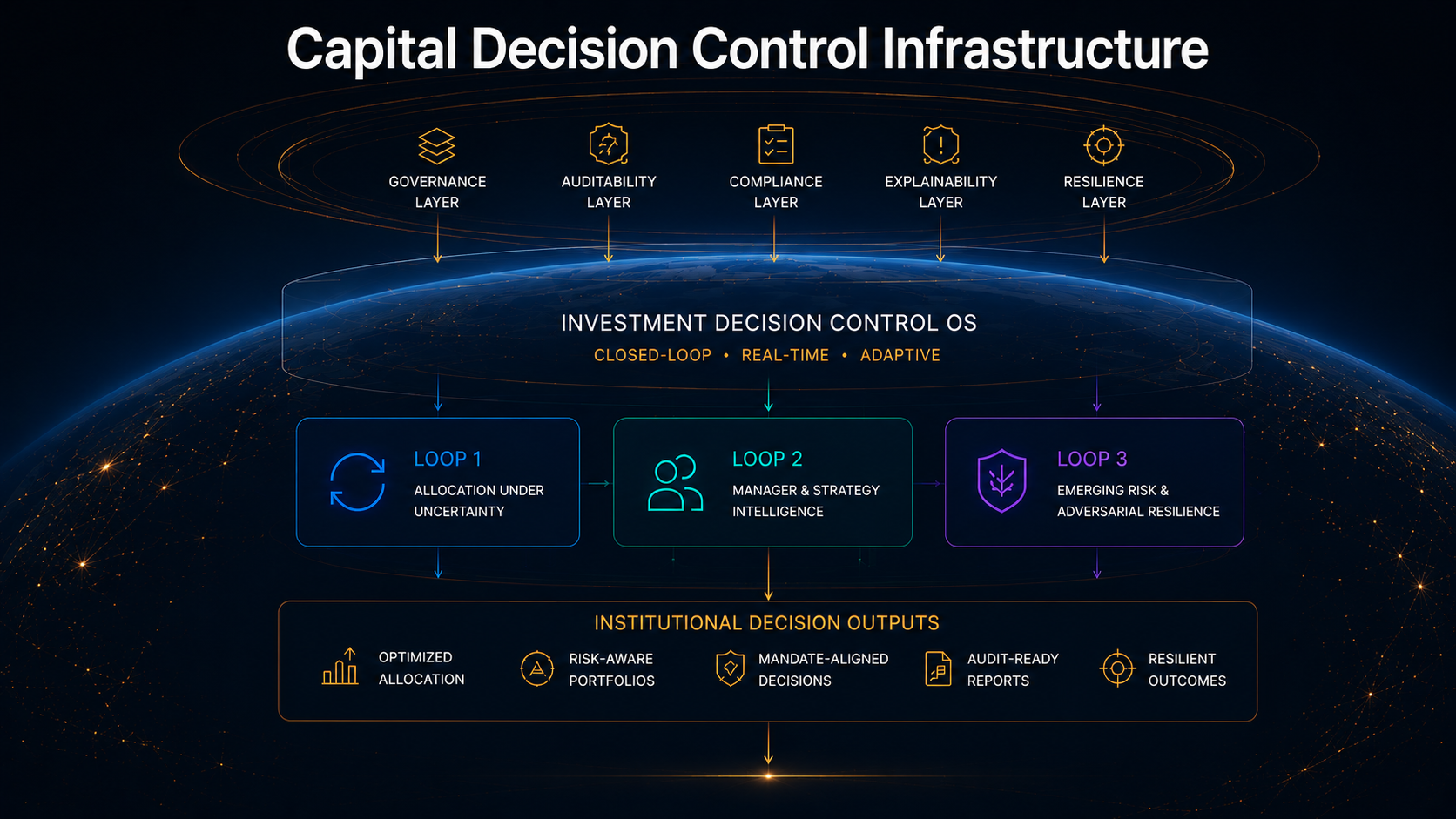
Operator‑Led Decision Control OS: Summary
The Operator‑Led Decision Control OS is the human‑governance layer of the Capital Decision‑Control OS.
It embeds operators at the center of capital decision control, ensuring all agentic AI actions remain directed, validated, and accountable to institutional objectives.
Positioned directly between the Capital Decision Control OS (the category layer) and the Capital Decision Control Infrastructure (the technical execution layer), it defines how human oversight governs, constrains, and authorizes the system’s capital decisions. As a core pillar of the OS, it establishes the human domain that works alongside Governed Intelligence Systems and Agentic AI Capital Control Infrastructure to deliver governed, drift‑free capital control.
DEFINITION
What Is Operator‑Led Decision Control OS: Human‑Anchored Capital Governance
The Decision Control OS is operator‑led. Unlike autonomous systems that drift without oversight, this OS embeds human operators at the center of capital governance. Operators direct, validate, and enforce decision‑control, ensuring agentic AI remains accountable to institutional objectives. This page defines the operator’s role, positioning human oversight as the defining attribute of governed intelligence.
WHY
Why Operator-Led Matters
- Prevents autonomous drift in capital decisions by embedding human oversight.
- Reinforces accountability through institutional governance structures.
- Differentiates from automation platforms that emphasize self‑running AI without control.
- Anchors institutional trust by ensuring decisions remain aligned with organizational objectives.
ROLE
Role of the Operator in the OS Hierarchy
Operators are not peripheral; they are central to the Decision Control OS.
Investment Decision Control OS: Operators anchor the category by directing capital governance.
Agentic Products (e.g., Frida): Operators validate and direct outputs, ensuring agentic AI remains accountable.
Governed Intelligence Systems: Operators embody the governance principle, making oversight actionable.
Governance Responsibilities
Operators carry the governance responsibilities that make the OS defensible and drift‑free:
- Direction; Setting objectives, mandates, and constraints.
- Validation; Reviewing and approving agentic outputs.
- Authorization; Determining which decisions can execute.
- Constraint Enforcement; Ensuring all actions remain inside limits.
- Accountability; Providing institutional oversight and defensibility.
OPERATOR LOOP
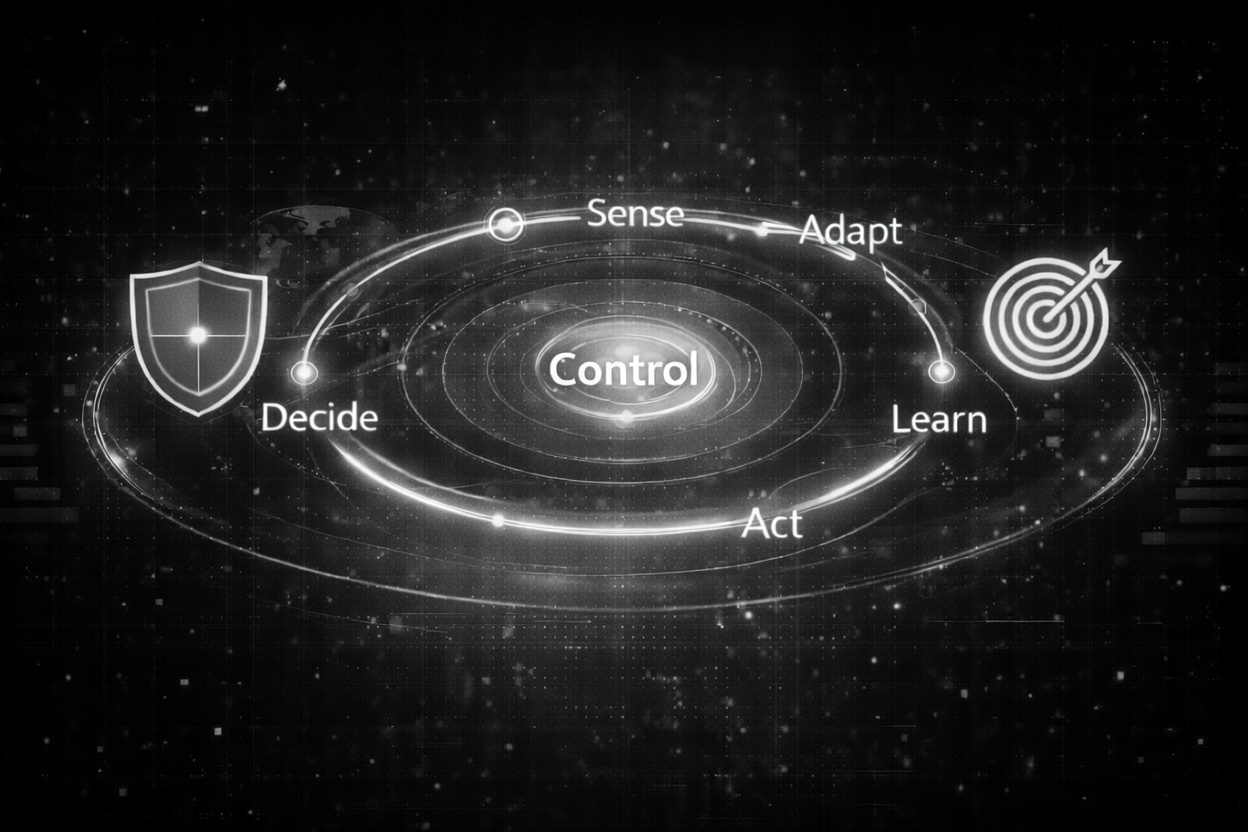
Operator‑AI Governance Loop
The OS is designed as a continuous loop of human‑machine governance:
- Human Oversight; Operators set objectives, constraints, and validation criteria.
- Agentic Execution; AI agents act within those boundaries.
- Controlled Outcomes; Operators review, adjust, and enforce compliance.
This loop ensures precision, accountability, and drift prevention.
RELEVANCE
Institutional Relevance
The operator‑led framing speaks directly to institutional leaders:
- CIO’s: Ensure technology aligns with governance.
- CFO’s: Validate capital decisions against financial objectives.
- Capital Leaders: Anchor institutional accountability in every decision.
By positioning operators as the core of the OS, the category resonates with decision‑makers who see themselves as stewards of capital governance.
RELATIONSHIP
Cross‑Links
Interaction With Capital Decision Control Infrastructure
interact with the Capital Decision‑Control Infrastructure by defining constraints, validating outputs, and authorizing execution. The infrastructure executes governed actions, but operators determine what is permissible, what is aligned with mandates, and what must be rejected or revised.
Interaction With Governed Intelligence Systems
Operators enforce governed intelligence by applying institutional rules, evidence requirements, and defensibility standards. Governed Intelligence Systems provide the governance architecture; operators apply it to real capital decisions, ensuring every action carries a complete reasoning chain.
Interaction With Agentic AI
Operators direct agentic AI by setting objectives and constraints, then validating the AI’s proposed actions. Agentic AI executes decisions, but operators determine whether those decisions are acceptable, aligned, and compliant. This prevents autonomous drift and ensures institutional control.
Interaction with Frida
Operators direct and validate Frida (Neuro Precision AI) by setting objectives and constraints, ensuring every agentic action remains governed, aligned, and authorized before execution. Frida operates inside the Operator‑Led Decision‑Control OS, executing capital decisions only within the boundaries operators define.
Interaction with the Investment Decision Control OS
Operators anchor the Investment Decision Control OS by translating mandates, risk tolerances, and institutional objectives into governed decision‑control. Their oversight ensures that all investment actions executed through the OS remain compliant, defensible, and free from autonomous drift.
GLOSSARY
Glossary Of Decision Control Terms
- Capital Decision Control OS: The top‑level category created by Acumentica. A governed, operator‑anchored system that directs, validates, and controls institutional capital decisions. It defines how capital is managed, constrained, and executed through governed intelligence and agentic AI.
- Operator‑Led Decision‑Control OS: The human‑governance layer of the OS. Operators direct and validate all capital decision‑control, ensuring agentic AI actions remain accountable to institutional objectives. Positioned between the category layer and the technical infrastructure.
- Governed Intelligence Systems: The governance domain pillar. Defines the rules, constraints, evidence trails, and admissibility structures that make AI‑driven capital decisions defensible, traceable, and compliant.
- Capital Decision‑Control Infrastructure: The technical execution layer of the OS. Implements governed intelligence and operator direction through agentic AI, constraint enforcement, and closed‑loop capital control.
- Agentic AI Capital Control Infrastructure: The agentic execution domain. Provides the AI agents, control systems, and constraint‑enforcement mechanisms that execute capital decisions under operator governance.
- Frida: The agentic product inside the OS. Executes governed, operator‑directed capital decisions with full constraint enforcement, mandate alignment, and drift prevention.
- Portfolio OptimizationOS: The governed optimization layer within the OS. Uses agentic AI to optimize portfolios inside strict operator‑defined constraints, mandates, and risk tolerances.
- Investment Decision‑Control OS: The investment‑specific application of the Capital Decision‑Control OS. Governs investment decisions, mandate alignment, risk enforcement, and capital allocation through operator‑led and agentic systems.
- Governed Capital Control: The principle that all capital decisions must be governed, traceable, and defensible. Ensures no autonomous drift and full institutional accountability.
- Operator Governance: The human oversight model that directs, validates, and authorizes capital decisions. Ensures agentic AI remains aligned with institutional objectives.
- Constraint Enforcement: The mechanism that ensures all capital decisions remain inside operator‑defined limits. Prevents drift, mandate violations, and uncontrolled AI behavior.
- Closed‑Loop Capital Control: A continuous feedback system where operators set objectives, agentic AI executes, and the system enforces constraints and returns validated outcomes.
- Governance Domain: The conceptual foundation of the OS. Defines the governance rules, evidence trails, and defensibility structures that all agentic and operator‑led components must obey.
- Human Domain: The operator‑anchored layer of the OS. Ensures human direction, validation, and accountability in all capital decisions.
- Agentic Domain: The AI execution layer. Executes capital decisions under governed constraints and operator oversight.
AGI Investment Research Labs
Where Investment Ideas Shape Tomorrow.
 https://acumentica.com/wp-content/uploads/2024/05/FinTech.jpeg
1024
1024
Team Acumentica
https://acumentica.com/wp-content/uploads/2026/02/Acumentica-Logo_Hor_with-Subtext_White_web-11.png
Team Acumentica2023-04-23 00:21:142024-05-02 22:02:00The Adaptation of GARCH Models in Investment Strategies: Implications and Applications
https://acumentica.com/wp-content/uploads/2024/05/FinTech.jpeg
1024
1024
Team Acumentica
https://acumentica.com/wp-content/uploads/2026/02/Acumentica-Logo_Hor_with-Subtext_White_web-11.png
Team Acumentica2023-04-23 00:21:142024-05-02 22:02:00The Adaptation of GARCH Models in Investment Strategies: Implications and ApplicationsExperience Investment Control
Your Strategy Deserves Precision
See how Acumentica helps investment teams forecast markets, optimize portfolios, and govern decisions within defined risk and mandate constraints.