

Why Investment Mandates Break Down Under Pressure
By Team Acumentica
Every investment team believes their mandates are clear.
They’re documented.
They’re agreed upon.
They’re reviewed.
They’re reinforced.
But when uncertainty spikes, mandates bend.
When pressure rises, mandates soften.
When markets move fast, mandates become “guidelines.”
This is not a behavioral issue.
It’s not a discipline issue.
It’s not a communication issue.
It’s a structural failure mode inside every investment organization that operates without governed decision-control.
Mandates break down under pressure because nothing is enforcing them.
Mandates Don’t Break; They Erode
Mandates rarely fail in one dramatic moment.
They erode slowly through small exceptions that compound over time.
Here’s how mandate erosion begins:
1. “Temporary” Exceptions
A team bends a rule “just this once” because the environment feels different.
2. “Contextual” Overrides
Research is overridden because “this situation is unique.”
3. “Interpretation Creep”
The mandate’s meaning expands or contracts depending on market conditions.
4. “Pressure-Based Flexibility”
When performance is under pressure, mandates become negotiable.
This erosion is invisible until it becomes catastrophic.
Why Mandates Break Down Under Uncertainty
Uncertainty doesn’t just affect markets.
It affects human judgment.
When uncertainty rises:
• teams become reactive
• signals feel urgent
• research feels outdated
• constraints feel restrictive
• mandates feel optional
This is how mandates lose authority.
Mandates don’t fail because they’re poorly written.
They fail because they’re not governed.
The Hidden Problem: Mandates Have No Enforcement Layer
Most institutions assume mandates are self-enforcing.
They’re not.
Mandates require:
• constraint enforcement
• override prevention
• research authority
• execution alignment
• uncertainty stabilization
• closed-loop governance
Without these, mandates collapse under pressure.
This is why traditional portfolio management cannot protect mandates.
It has no enforcement layer.
Why AI Tools Make Mandate Breakdown Worse
AI tools accelerate mandate erosion because they:
1. Increase Override Frequency
AI suggestions often conflict with mandates.
2. Increase Signal Velocity
Teams react faster — often too fast.
3. Increase Interpretation Variance
Different team members interpret AI outputs differently.
4. Increase Mandate Flexibility
AI tools create urgency, not discipline.
AI tools are not designed to enforce mandates.
They are designed to generate intelligence.
And intelligence without control destabilizes mandates.
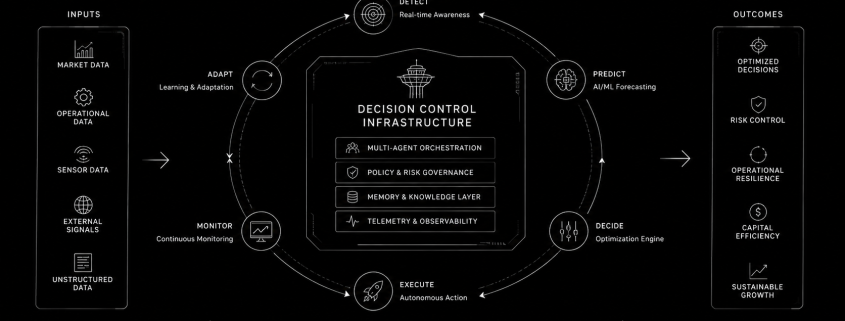
The Only Way to Protect Mandates: A Governed Decision Control System
Mandates remain stable only when decisions are governed by a closed-loop system that enforces:
• mandate alignment
• constraint adherence
• override prevention
• research authority
• execution consistency
• uncertainty stabilization
This is what the Capital Decision Control OS provides.
It doesn’t replace human judgment.
It stabilizes it.
It doesn’t eliminate uncertainty.
It governs decisions inside it.
It doesn’t restrict intelligence.
It prevents intelligence from destabilizing mandates.
How a Decision Control OS Stabilizes Mandates
A governed OS protects mandates through three mechanisms:
1. Constraint Enforcement
Mandates remain fixed even when uncertainty rises.
2. Override Governance
Overrides require structural justification, not emotional reaction.
3. Closed-Loop Execution
Decisions feed back into the system, preventing interpretation creep.
This is how mandates remain stable under pressure.
Mandates Are the Backbone of Performance; But Only If They Hold
When mandates break down:
• drift accelerates
• execution fragments
• research loses authority
• volatility increases
• performance destabilizes
Mandates are the backbone of institutional performance.
But only if they hold under pressure.
The future belongs to institutions that operate inside governed systems of control.
Because mandates without control are suggestions.
And suggestions cannot govern capital.
Learn More
If your investment organization is looking to reduce decision drift, strengthen governance, and maintain execution consistency under uncertainty, explore how Acumentica’s Capital Decision Control OS provides a governed, closed-loop operating layer for institutional investment decision making.
Why Investment Teams Drift Under Uncertainty (and How to Stop It) The Missing Layer Between Research and Execution: Decision Control What Is a Capital Decision Control Infrastructure? The New AI Architecture Wall Street and Enterprises Will Need Why Investment Teams Fail: The Missing Governance Layer
About Acumentica
We are a Precision AI-powered Capital Decision Control Infrastructure company.
We help institutions make better decisions under uncertainty and avoid costly mistakes by transforming complex data, risk, and constraints into clear, disciplined next actions. Contact Us